



impossible to
possible

LucyBrain Switzerland ○ AI Daily
The $600B AI Factory Turning Point, MediaTek’s Blackwell Desk Powerhouse, and the Vatican's 42,000-Word Tech Strike
The $600B AI Factory Turning Point, MediaTek’s Blackwell Desk Powerhouse, and the Vatican's 42,000-Word Tech Strike
Today is Thursday, May 28, 2026. The tech economy has formally crossed an irreversible threshold. The industry is moving past the era of software experimentation and into a period of deep industrialization, defined by historic capital outlays, massive multi-chip hardware alignments, and a sweeping moral critique of concentrated digital infrastructure.
1. The Industrial Era: Global AI Factory Capex to Cross $600 Billion in 2026
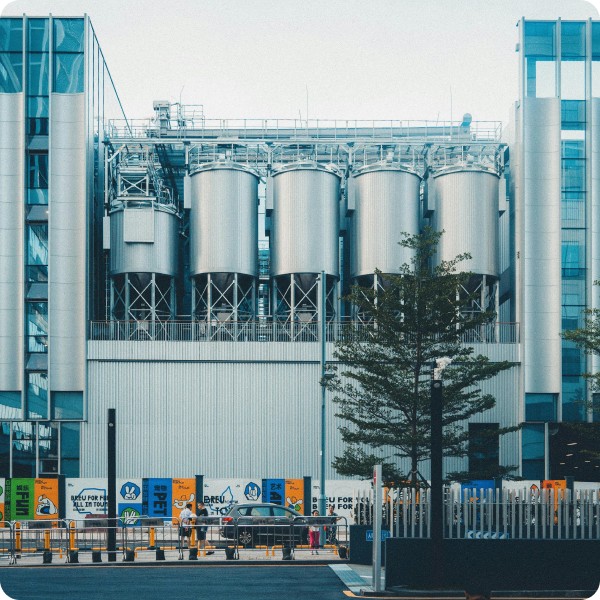
According to a comprehensive tracking report released today by Omdia, the global technology sector has entered a brand new era of heavy industrialization, permanently redefining how data centers are built and valued (Omdia Insights).
The Core Metrics: Leading technology enterprises are collectively on track to deploy over $600 billion in AI infrastructure capital expenditure in 2026 alone, with total global data center investment projected to approach $1.6 trillion by 2030 (Omdia Insights).
The Token Economy: Omdia formally defines this shift as the birth of the "AI Factory"—a massive, highly capital-intensive industrial structure whose sole objective is the physical manufacturing of intelligence, treating the token as its fundamental unit of output (Omdia Insights).
The End of "Compute Hoarding": In a massive shift for silicon markets, corporate budgets for blind compute hoarding have frozen due to a global "Zombie GPU" effect, where expensive processors sit idle in I/O wait queues (Omdia Insights). Evaluation metrics have moved entirely from theoretical processing speeds to Time to First Token (TTFT) (Omdia Insights).
2. The Desktop Superchip: MediaTek and Nvidia Unveil "DGX Spark" Ahead of Computex
To support localized, autonomous task orchestration without relying on massive off-site cloud architectures, MediaTek and Nvidia launched a massive desktop partnership today (MediaTek Press Room).
The Blackwell Grid: Ahead of Computex 2026, the companies revealed the Nvidia DGX Spark, an edge-computing powerhouse built around the flagship Nvidia GB10 Grace Blackwell Superchip (MediaTek Press Room).
The Performance Paradigm: The desktop module pairs a blistering 1-PetaFLOP GPU architecture with a 20-core CPU, sharing a coherent, unified LPDDR5x memory pool to effortlessly run frontier-class models directly on a local desktop workspace (MediaTek Press Room).
The Smart Home Leap: Simultaneously expanding consumer hardware bounds, MediaTek introduced the Pentonic 800, celebrated as the world's first AI TV SoC to support Dolby Vision 2, utilizing an integrated content intelligence engine to handle advanced image restoration and motion forecasting on local displays (MediaTek Press Room).
3. Moral Resistance: Inside the Vatican's 42,000-Word Attack on Concentrated Digital Power
More details have emerged from Rome following the official publication of Pope Leo XIV's first encyclical, Magnifica Humanitas, establishing a rigid, human-first philosophical wall against unhinged technology expansion (Catholic Weekly).
The Anthropic Alliance: Christopher Olah, co-founder of Anthropic—the lab currently locked in an intense legal battle with the Trump administration over federal code access—personally joined the Pope in Synod Hall (Catholic Weekly). Olah explicitly blasted the tech sector's lack of internal incentives to share the economic gains of automation equitably (Catholic Weekly).
The Asymmetry Strike: The sprawling 42,000-word text warns that when a tiny handful of private board members control the world's data and computational resources, it creates a dangerous economic and political asymmetry that threatens democratic public accountability (Minot Daily News).
Time Over Space: Endorsing a profound view of human development, Pope Leo wrote that "time is greater than space," urging regulators to focus on setting up safe, gradual institutional processes rather than rushing to claim unchecked positions of market dominance (Catholic Weekly).
4. Silicon Integration: Gigabyte Debuts 50-TOPS Intel 18A Edge Platform
To help companies bypass cloud latency and meet strict local data compliance rules, hardware pioneer Gigabyte Technology unveiled its latest enterprise mini-PC architecture (Gigabyte Press News).
The 18A Node: Built on Intel's highly anticipated 18A process node technology, the BRIX Mainstream GB-BRU9-386H delivers a massive 75% boost in local NPU performance compared to legacy hardware configurations (Gigabyte Press News).
Ultra-Slim Inference: Packing 50 TOPS of NPU execution and 40 TOPS of GPU compute into a tiny 0.46-liter chassis, the platform is optimized for real-time machine vision, medical imaging, and on-premises AI inference in space-constrained corporate settings (Gigabyte Press News).
Tech Spotlight: Embedded Bluetooth NPU Cores
As the Internet of Things (IoT) matures, short-range radio components are ditching remote cloud processing entirely to handle neural compute workloads right on the chip (u-blox News).
The u-blox & Nordic Alliance: Wireless communication leaders u-blox and Nordic Semiconductor introduced the ALMA-B2 Bluetooth LE module series today (u-blox News).
15x Faster Processing: Featuring a dedicated hardware Neural Processing Unit (NPU) integrated directly alongside a Bluetooth 6.0 wireless MCU architecture, the compact component processes local machine learning telemetry up to 15 times faster than standard IoT setups, radically slashing power consumption for advanced medical trackers and industrial machinery (u-blox News).
Prompt Tip of the Day: The "Agentic Architect" — Zombie GPU Auditor
Inspired by Omdia’s industrial AI Factory insights, use this prompt to turn your AI into an infrastructure efficiency auditor to confirm your expensive hardware resources aren't idling in I/O wait states.
The Prompt:
"act as a professional chief ai architect and senior systems engineer. i want to audit our current model execution pipeline [insert tech stack or cloud provider environment] to identify and eliminate 'zombie gpu' operational drains based on the late may 2026 industrial framework. please structure a framework for this agent that includes:
* the 'zombie gpu' latency pass: instructions for the agent to calculate our actual time to first token (ttft) and isolate points where high-cost processors are idling due to slow data loading or memory transfer barriers.
* the 'dgx spark' desktop baseline: a requirement that the system model whether migrating our local engineering workflows to a unified, shared-memory desktop setup (like a grace blackwell 1-petaflop profile) would reduce our monthly public cloud api spend.
* the 'vatican asymmetry' safety check: an internal metric ensuring that our pipeline maintains clear audit logs so that proprietary customer data cannot be swallowed up by a handful of centralized public infrastructure blocks.
* the 'alma-b2' edge layout: a template for identifying if our lowest-stakes telemetry gathering can be offloaded onto hardware-integrated edge npus, removing cloud routing latency completely.
for each point, provide clear, step-by-step rules that would allow an ai agent to operate as a professional, thorough, and highly inventive infrastructure audit partner."
Newest Prompt Articles


More Prompt Articles Like This























Thinking
Explore